Overview
PaySnap is a digital wallet and payment platform built and sold by CircleCodes on CodeCanyon. It runs on Next.js, React, AdonisJS and MySQL. Four kinds of user share one system:
- Customers hold multi-currency wallets, send money, pay bills, invest and issue virtual cards.
- Merchants accept payments by QR code, payment link or a website API.
- Agents handle cash deposits and withdrawals for customers and earn commission.
- Admins run the platform: users, KYC, fees, commissions and payment gateways.
I worked on it as a frontend developer at CircleCodes.
The challenge
A wallet app is about money, so every screen has to be clear and trustworthy:
- Four roles in one product. Customers, merchants, agents and admins need different dashboards built from the same pieces, and merchants also get every customer feature.
- Lots of money in, lots of ways. Deposits come from a long list of gateways (PayPal, Stripe, Razorpay, Flutterwave, Paystack, bKash, Coinbase, mobile money and more) or through an agent, and every flow has to show fees and the final amount before the user confirms.
- Multi-currency everywhere. Balances, transfers, exchanges and history all work across currencies, such as XOF, USD, INR and NGN in the demo.
- Security people can see. Two-step verification, KYC status, active-session management and real-time alerts have to be obvious in the interface, not buried in settings.
The solution
Customer dashboard
The customer’s home shows a card for each wallet, with its balance and a shortcut to issue or view a virtual card. Below are the latest transactions, with type, amount, fee, amount after processing and status. On the right are Quick Send (up to five saved contacts), Favorites, and a Refer a friend link with one-click copy.
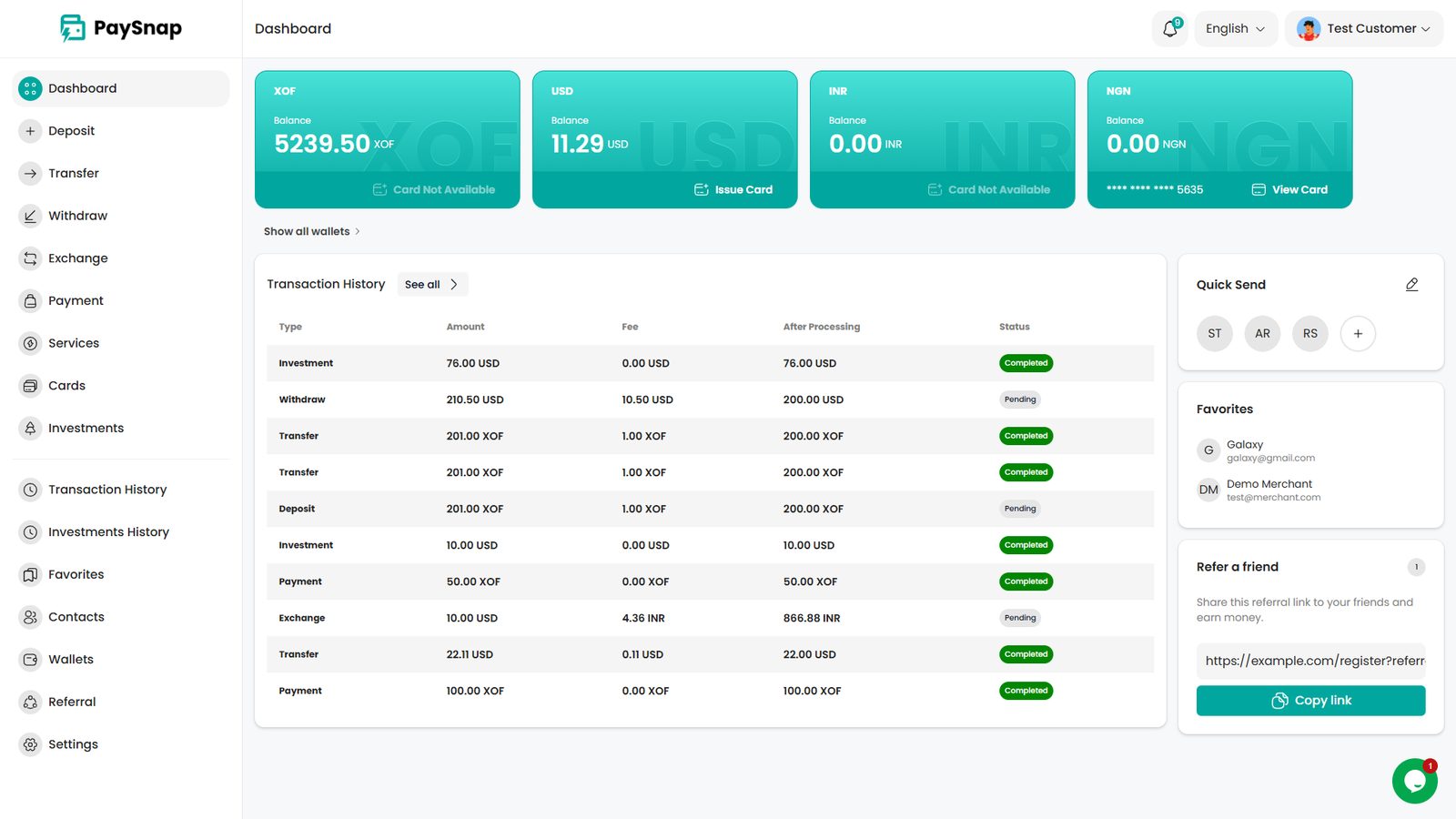
The sidebar covers the full set of features:
- deposit, transfer, withdraw and exchange
- payments to merchants, and services (mobile recharge, electricity and other bills)
- virtual cards (via Stripe, Sudo Africa, PentraaWallet and Strowallet, depending on region)
- investments, transaction and investment history, favorites, contacts, wallets, referrals and settings
Merchant dashboard
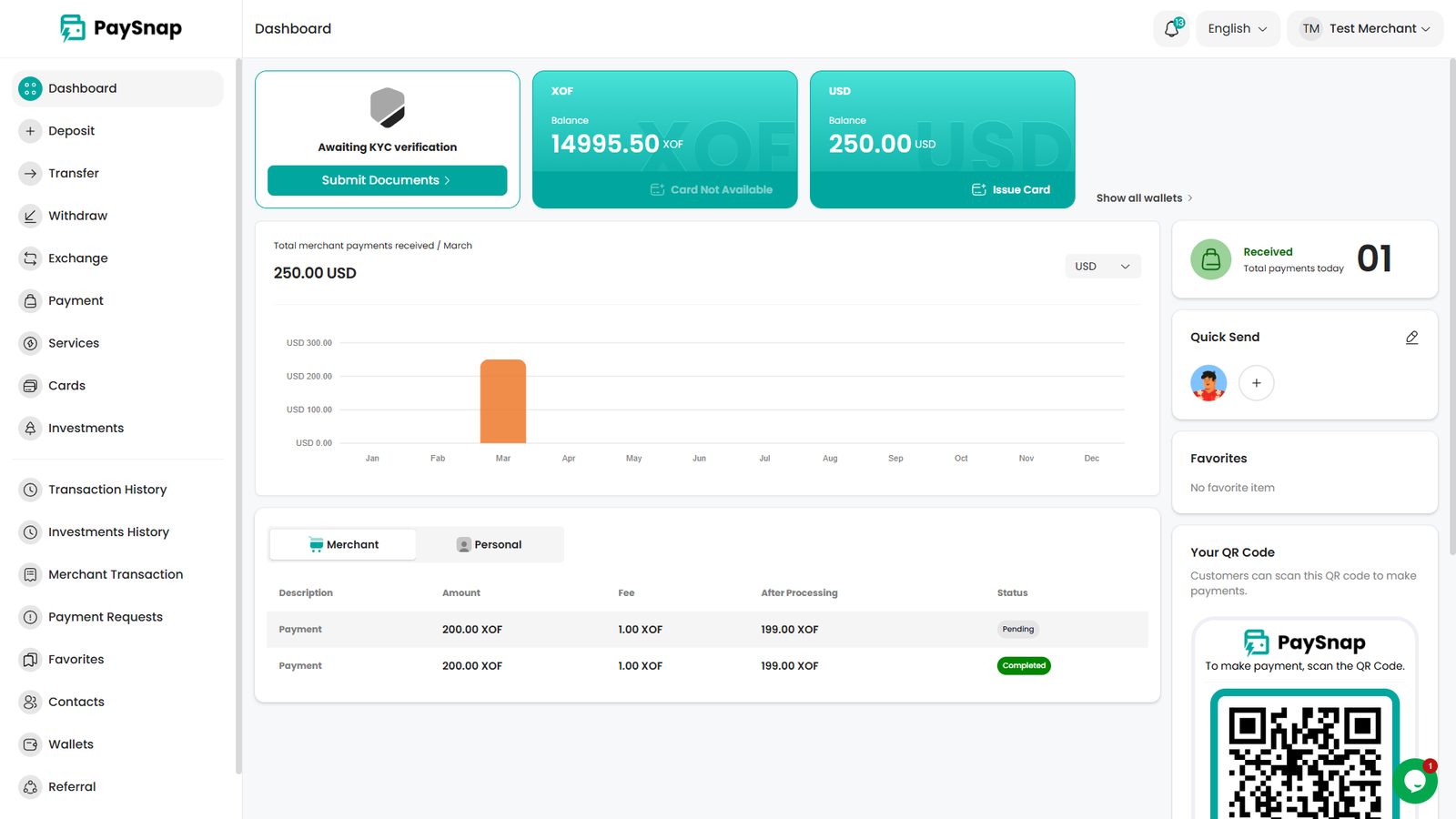
Merchants get everything a customer has, plus:
- a payments received chart by month and currency
- today’s payment count
- separate Merchant and Personal transaction tabs
- Payment Requests, sent with a link and a QR code
- a QR code customers can scan to pay
A clear Awaiting KYC verification → Submit Documents card shows what to do next until the account is verified.
Agent dashboard
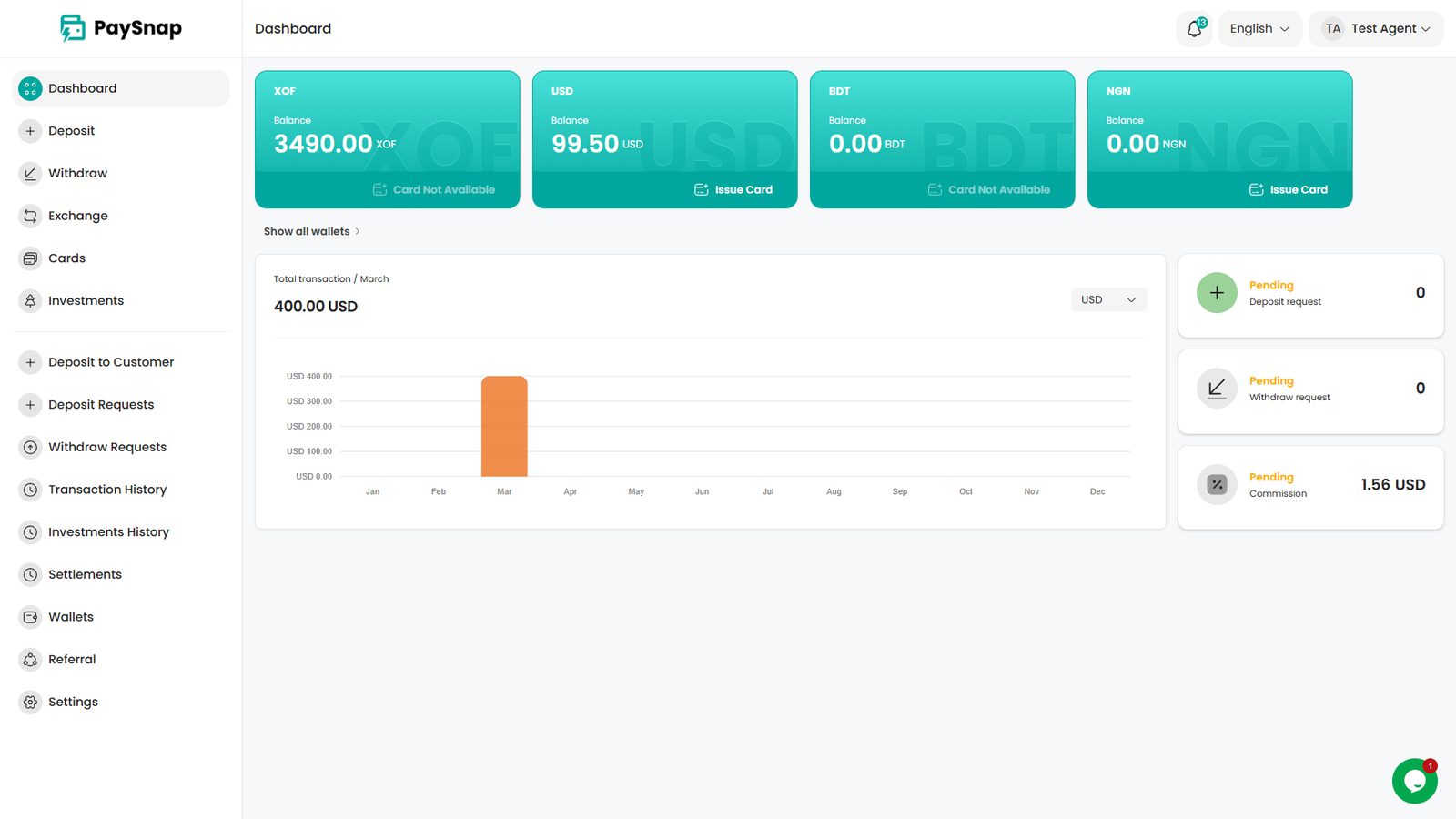
Agents see their earnings and the deposit and withdrawal requests waiting for them. From there they can deposit straight to a customer’s account, handle requests with filters and export, and track their commission.
Admin dashboard
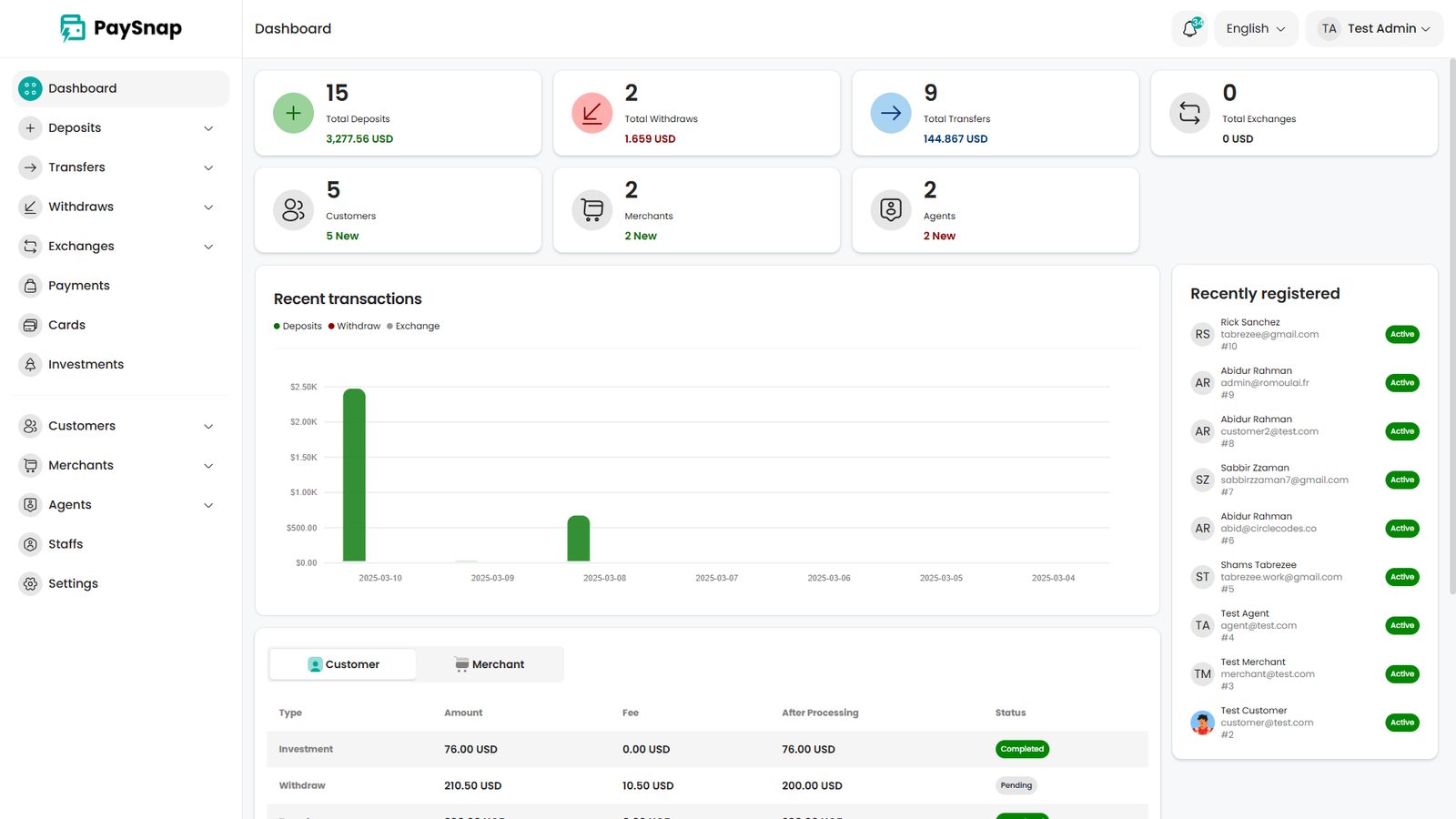
The admin panel brings together platform statistics and transaction history. It also covers:
- customer, merchant, agent and investment-plan management
- KYC review
- a tiered commission and fee system, with per-merchant and per-agent overrides
- payment gateways and plugins
- group email and notifications
- languages
P2P trading (v2)
Version 2 added peer-to-peer trading. A buyer or seller posts a trade ad with a price and payment methods, and another user places an order against it. The crypto is held in escrow until the seller confirms payment, and the two sides settle through a built-in order chat. Either side can open a dispute, which keeps the funds locked until an admin resolves it.
Key features
- Four role-based dashboards: Customer, Merchant, Agent, Admin
- Multi-currency wallets with balances, exchange and history
- Virtual cards through several card providers
- Deposits from 15+ payment gateways, or through agents
- Transfers, Quick Send, contacts and favorites
- Utility bill payments and mobile recharge
- Investment plans and a referral program
- Merchant QR codes, payment requests and a website payment API
- KYC verification, two-step verification and active-session management
- Real-time notifications and built-in live support
- P2P trading with escrow, chat and disputes
- Multi-language, including RTL Arabic (added in v1.1.0)